There are many ways to teach and to learn. I am a visual learner at best—if I can see it, I can repeat it. When I was a preschool teacher, however, I learned that one of the fastest ways to teach was by song. There are of course, the classics, “clean-up, clean up, everybody, everywhere, everybody do your share.” But if I didn’t know a song about the task at hand, I’ve made up a song about how to spell the word cow or about the feelings of frustration when it’s your turn but that wasn’t respected. Songs and music help us navigate this world, especially when we are overwhelmed with beauty, grief, anger, or even, “hey, it’s my turn!”
Perhaps that is why as I was praying through this week’s gospel lesson, my mind kept returning to a song that we would sing in youth group when I was a kid. It was simple and folksy, but I would always request it: “They’ll Know We Are Christians by Our Love.” It was a source of true prayer as the Christians around me began to turn to Christian nationalism, known not by love, but by blood lust and delight in other’s pain in the wake of 9/11, following which most of my senior class went off to college, but some went to war in the Middle East.
The hymn’s verses ring out, “We are one in the Spirit, we are one in the Lord, and we pray that unity may one day be restored, and they’ll know we are Christians by our love, by our love. Yes, they’ll know we are Christians by our love.” I didn’t realize until this week. . .I didn’t realize until I wrestled with the local, regional, and global news paired with our gospel lesson today why this song mattered so much to me when I was 17. Because in many ways the longing in this hymn mirrors the prayers I was praying as a young Christian, and it is in alignment with one of Christ’s last commandments to his disciples before he ascended into heaven.
It turns out that this simple hymn, “We will work with each other, we will work side by side, and we’ll guard each one’s dignity and save each one’s pride, and they’ll know we are Christians by our love, by our love.” This hymn may have connected with me and been on my mind because of the scriptures and because of the happenings in the world because it was based on John 13:35, just a few verses ahead in what we hear today, beginning what is known as Jesus’ Farewell Discourse to his disciples. I’ve learned this week that it was written by a Catholic priest who was working with a youth choir on the south side of Chicago who needed a hymn for an ecumenical and interracial gathering in 1966.
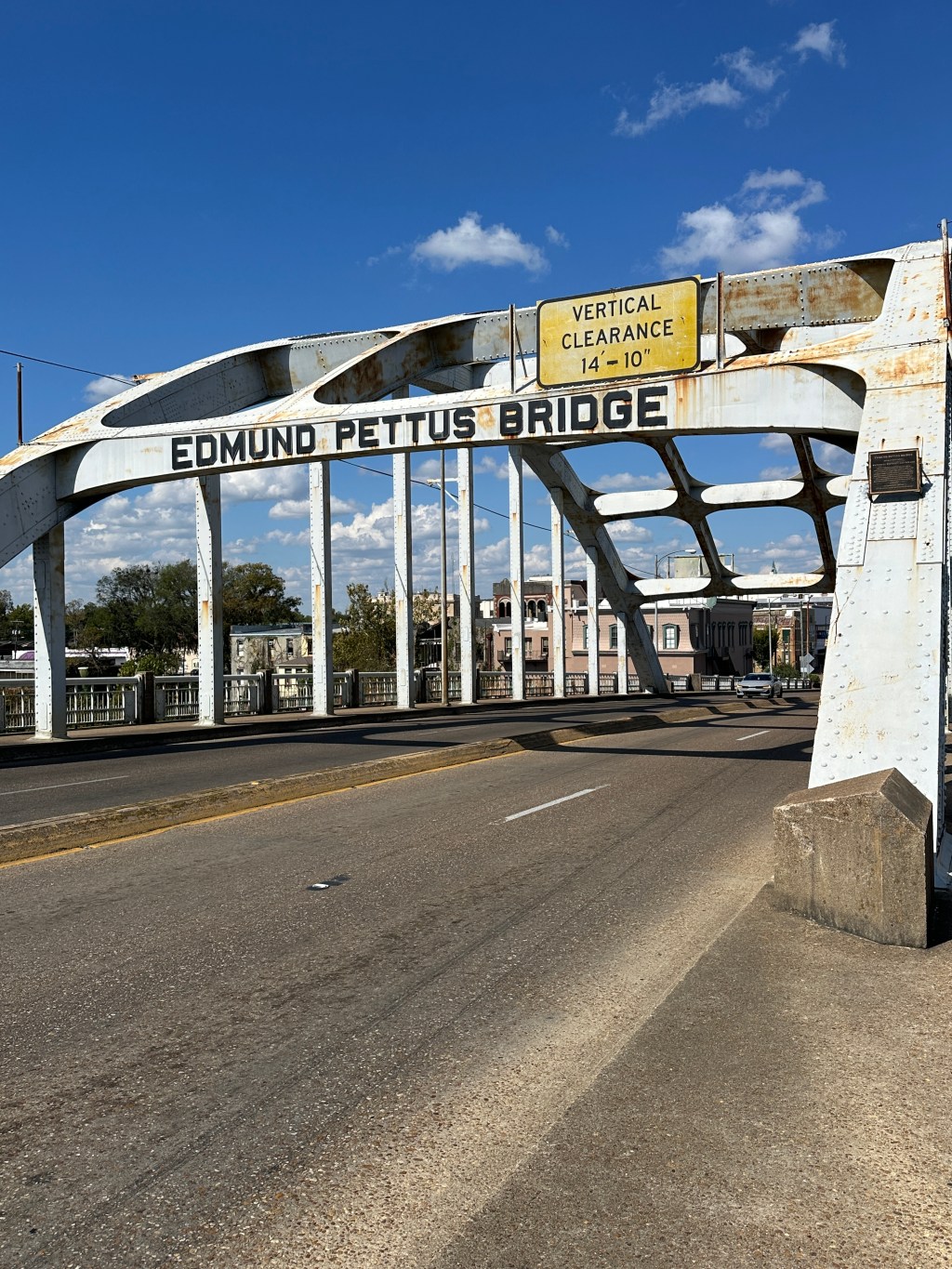
This past October, I walked with a group of pilgrims from our Diocese who traveled to Selma and Montgomery across the Edmond Pettus Bridge, upon which in 1965 non-violent supporters of the Voting Rights Act were marching to Montgomery, and were attacked on the bridge, brutally beat by the Alabama Police on what is now known as Bloody Sunday. The Voting Rights Act passed, but not without more bloodshed and more violence as the Civil Rights Movement continued. This is the shadow in which Father Peter wrote his folk hymn.
And it’s a similar struggle with voting rights that this hymn came to mind for me this week with the reversal of a crucial part of that very Voting Rights Act and the district changes happening in immediate response. This hymn came to mind in my prayer because there is a desperate need in our society, nation, and world for Christians to be known first and foremost by our love.
I’ve struggled this week to not feel overwhelmed with things happening in and by our nation, to be honest. And I’ve struggled with how to show love to others because I’m inclined to turn inward when things feel scary and sad, or to dull my anger at injustices in an attempt to save myself. But then I remember what Christ told his disciples, who were also probably pretty darn scared and overwhelmed, “If you love me, you will keep my commandments.” Here he is referring to the very verse that inspired Father Peter to write that hymn 70 years ago, “I give you a new commandment, that you love one another. Just as I have loved you, you also should love one another. By this everyone will know that you are my disciples, if you have love for one another.” (John 13:34-35) And I remember that Jesus isn’t asking us to love others like we love him but commanding us. And then I remember that Christ told his disciples, and therefore us, that we don’t go at this loving business on our own, that we have the Advocate, the Paraclete, the Holy Spirit. The person of God who partners with us not only in our prayers to God, but also in our movements about this earth as we struggle and/or delight to show love to others.
And I remember that love is not a static noun, unmoving and cumbersome, but is a verb, active and fluid. Love is a powerful force in this world, the most important thing that our Savior imparted to his disciples before he left them for a final time. Love is an unstoppable and inexplicable force between us and our fellow humans and all of God’s creation, and it is only foundation upon which we move. Friends, God is known to those around us and to the whole world when we show love to others, and if they don’t know us by our love, how will they ever know us?
So go and to love and serve the world. Love with joyful Easter abandon. Love in way that draws you toward others, because it is hard to hate up close. Love like it is the best part of being Christian, because that’s how others will know us, they will know us by our love.
A sermon delivered on May 10, 2026 to the people of St. Mary’s Episcopal Church in Middlesboro, KY on John 14:15-21 for Easter 6A.


Leave a Reply