When my nephews were little, they would love to tell stories, and like every little kid, each story took on a particular child-like wonder. For my youngest nephew, his angle was the never-ending story, when things felt like they were wrapping up, his little 5-year-old voice would ramp up and say, “AND THEN!!….” and there would be another series of details that may or may not make a sense, but for him, it was vital to it’s telling. I love storytelling, and there’s something to this kind of storytelling, this never-ending story that names something true that stories do for us: they reflect our lived realities. Happily ever afters and other myths do make for nice conclusions, but they aren’t real. Real stories, stories that shape our lives keep going.
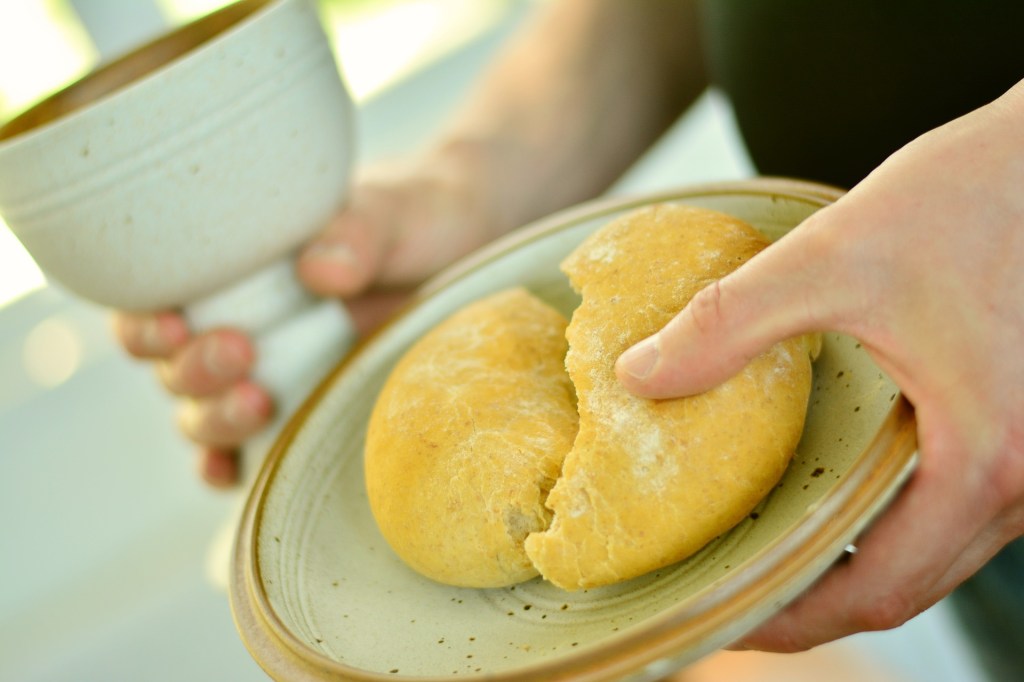
Today’s gospel, has that same sort of “AND THEN!..” storytelling quality to it. Last week, we heard about the disciples locked in the room, and Thomas, to whom Christ comes and visits again a week later. Yet today, we are back on the day of the resurrection, two disciples are walking the seven miles from Jersualem to their village processing the past three days of Jesus’ death, the empty tomb, and the news of the resurrection. And I wonder if the two disciples feet ached as the sandles rubbed as they walked along the road. I wonder if they were talking in hushed, fearful whispers to each other or if one was a little more quiet and the other more animated and boisterous in his recounting and processing of the events. I wonder if Cleopas, when he asked Jesus, though he didn’t yet know it was Jesus, if he had been living under a rock and missed the biggest news to hit all of land, if he was genuinely concerned for this stranger’s lack of connection or if it was a sarcastic, “are you the only stranger who doesn’t know?” I wonder if as they recounted Jesus’s death and resurrection if it was slowly dawning on them in the way that it does the first time one shares big news out loud to someone who hasn’t been with you the whole way. I wonder if their throats caught and tears pricked their eyes when Cleopas said, “it was just as the women had said, they did not see him.” And I wonder how it felt for them to have this stranger-slash-resurrected-Christ open the scriptures to them, explatining in great detail the big and important things in life that are important. When they arrived to their village turn-off, as the stranger-slash-resurrected-Christ went to walk on, I wonder what it felt like for them to decide that the next right thing was to invite this stranger into their home, just as Christ would have done. And I wonder as they passed the olive oil and bread to the stranger-slash-resurrected-Christ for him to bless, if they had any inkling before Christ blessed, broke, and shared the bread. We know then, that their eyes were open, they knew that they were so moved by this that they got up from the table, and returned to Jersualem, even though they had just walked those seven miles back home, so that they could confirm with the others that Christ was made known to them in the breaking of the bread.
The Road to Emmaus as this story and passage is often called, is one that is woven into our spiritual bones by lines like, “When he was at the table with them, he took bread, blessed and broke it, and gave it to them.” being woven into our Eucharistic prayers. And I’d like to invite us all to stay on the Road to Emmaus for a while this morning because I believe that here, God is inviting us into the wholeness of resurrection, and into the true and real hope.
To stay on the Road to Emmaus is to stay curious with these two disciples who were walking and talking, and then sharing with a stranger as he approached all that they had just gone through. There is no doubt for me that fear, grief, overwhelm, hope, and some measure of disappointment were at play for them as they were walking home. Then as their new conversation partner talked with them, they continued to learn and grow and the resurrected Christ opened up the scriptures for them as they walked.
To stay on the Road to Emmaus is to be changed by the life of Christ and by being Christ’s follower. When the stranger-slash-resurrected-Christ goes to keep walking as the day is ending and they are turning toward their village and home, they welcome the stranger in, urging him to stay, Luke tells us. This sort of hospitality, especially to the stranger, especially to the stranger two days after your Rabi was brutally murdered, is one that comes after a life that is deeply changed by the radical hospitality that they came to know through Jesus.
And to stay on the Road to Emmaus means to share the Good News. After they realized this was no stranger that blessed and broke the bread that they were sharing, that it was the resurrected Christ, they got up, that hour, and walked the Road to Emmaus (but this time, back to Jersasuelm), to share the Good News with the other disciples. They found them, perhaps locked in the upper room that we heard about last week. And I can imagine them sharing the news with anyone they encountered along the way, “I have seen the Lord!”
In the Episcopal Church, we celebrate Easter for 50 days, and to me, the Road to Emmaus is one way to tap into that joy for an extra week. Because the Good News of the empty tomb wasn’t just good to Mary, or to the disciples and Thomas locked in the room who were at first afraid, but to so many others who followed Christ’s teachings, and then for thousands of years more to come, and ultimately to us today. The Good News of God in Christ is that God is with us, no matter the mess. That Immanuel, God is with us, and not just at Christmas and Easter, but in all sorts and conditions. The Road to Emmaus shows us that a true and lasting hope of the resurrection is one that all encompassing, is curious, is changed by following Christ, and is ready to share the Good News, even as the story keeps unfolding.
A sermon delivered to the people of St. John’s Episcopal Church in Corbin, Kentucky for Easter 3A on Luke 24:13-35.


Leave a Reply