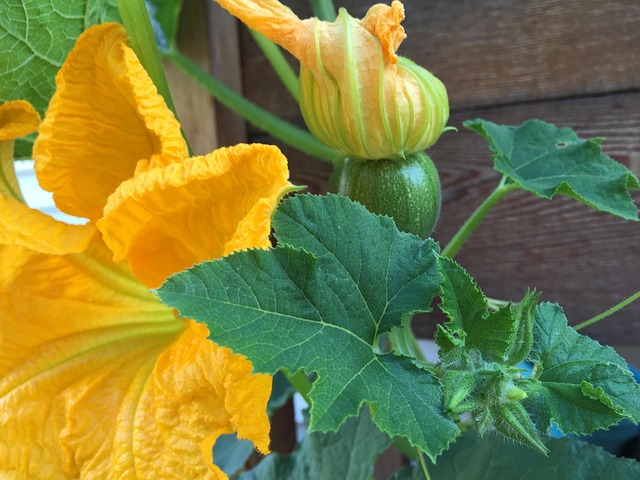
“Of all the wise teachers who have come into my life, none are more eloquent than these, who wordlessly in leaf and vine embody the knowledge of relationship. Alone, a bean is just a vine, squash an oversize leaf. Only when standing together with corn does a whole emerge which transcends the individual.” This is how Robin Wall Kimmer, Indigenous botanist, author, and professor who taught at Transylvania University and Centre College here in Kentucky, describes what many throughout history have termed a “three sisters garden” in her book Braiding Sweetgrass. A three sisters garden in a relatively small space, plants corn, beans, and squash together in a mound, rather than in mono-culture lines. I often think about the three sisters garden: the corn giving the winding beans a support, the big leafy squash shielding from weeds, and the beans putting nitrogen back into the soil. Kimmer goes on, “The gifts of each are more fully expressed when they are nurtured together than alone. In ripe ears and swelling fruit, they counsel us that all gifts are multiplied in relationship. This is how the world keeps going.”
The work that has brought us here today reminds me of the three sisters as well. When I came to the Diocese of Lexington, one of the things that I saw an opportunity for was to till the soil. The gifts of the congregations and people were already in place, but sometimes we must spend time in preparation, and we have spent the last nine months in preparation this joyful day. I am reminded of the three sisters because in this garden, it is not the unification of these three plants that makes them special, but rather it is how they support and enrich each other, while being distinctly different. In her chapter on the three sisters, Kimmer goes on to say, “Individuality is cherished and nurtured, because, in order for the whole to flourish, each of us has to be strong in who we are and carry our gifts with conviction, so they can be shared with others. Being among the sisters provides a visible manifestation of what a community can become when its members understand and share their gifts. In reciprocity, we fill our spirits as well as our bellies.” And as Bishop Jeff has noted in his short time with us here in the Diocese of Lexington, food is always part of gathering.
The work of the Southern Tier—the work of Christ Church, Harlan, St. John’s, Corbin, St. Mary’s, Middlesboro, and Father Bruce—to me, is the work of the three sisters. As Saint Paul tells us in our Epistle lesson, Christ gave gifts for the building up of the body of Christ. We know that God is the giver of all good gifts. If any among us aren’t sure of what you bring to the garden, then ask your neighbor what gifts they see in you. And we also know that in a time where our world can feel barren and desperate for hope, we proclaim Christ and Christ alone. There is no greater hope than the unrelenting hope of the resurrection. And my siblings in Christ, we know—we know deep in our three sister bones, that the harvest is plentiful in each of our communities. My prayer as you all begin this new ministry partnership is that should you forget your giftedness, it is because it has become so second nature like the husk of a corn rising to the sky, the placement of a leaf, or the tendril of a bean knowing where to wrap for the perfect support. And if you become weary by the number of laborers alongside you that remember that your sisters are out there, preparing for the harvest too.
Now, if y’all will indulge me, I want to share something else I learned from Kimmer’s Braiding Sweetgrass; this one comes from the chapter about pecan trees called, “The Council of Pecans.”

“If one tree fruits, they all fruit—there are no soloists. Not one tree in a grove, but the whole grove; not one grove in the forest, but every grove; all across the county and all across the state. The trees act not as individuals, but somehow as a collective. Exactly how they do this, we don’t yet know. But what we see is the power of unity. What happens to one happens to us all. We can starve together or feast together. All flourishing is mutual.”
All flourishing is mutual, my friends. All flourishing is mutual. Y’all are going to get up to some good flourishing, and I can’t wait to see it.
Father Bruce, may you remember that the harvest is plentiful, and the laborers few, but that few never means going at it alone. All flourishing is mutual.
To my sisters, brothers, and friends at Christ Church, St. John’s, and St. Mary’s: may you remember that you are more gifted than you know, and I know, Father Bruce and I made y’all take many inventories in our time together. Y’all are more gifted than you know, but especially when you lean on each other. All flourishing is mutual.
And to all of us here praying for the beginning of this new ministry partnership, may we all remember that we are in this Christian life together, and that the harvest is plentiful, we are ready, gifted, and called. May God bless this partnership, and may we remember that all flourishing is mutual.

A sermon delivered to the people of the Southern Tier Ministry Partnership on August 22, 2026 for the Installation of the Rev. Bruce W. Cory at the Pine Mtn. State Resort Park in Pineville, Kentucky on Ephesians 4:7, 11-16 and Luke 10:1-2.


Leave a Reply