One of my very favorite phrases in this world is, “More is caught than taught.” I first learned it when I was a preschool teacher, and it consistently rang true. If I sat crisscross-applesauce on the carpet ready for Circle Time with my hands in my lap, soon the kids would follow. If I made sure to push my chair in every time I got up, it would be picked up quickly, and even when reminders were needed, I never had to teach these direct actions. When we look at our own learning, we see how this is true for a variety of aspects, but one of my favorites is in storytelling. A story has much greater impact if one is able to craft an illustration with words or pencil or film, than if one chooses to directly relay the message and the intent of the story without leading the hearer of the story to the conclusion before the story ends. This is why, in my view, fiction and myth and parable have the greatest impact and power to tell phenomenal truths that may be too big for us to comprehend as straight fact or direction.
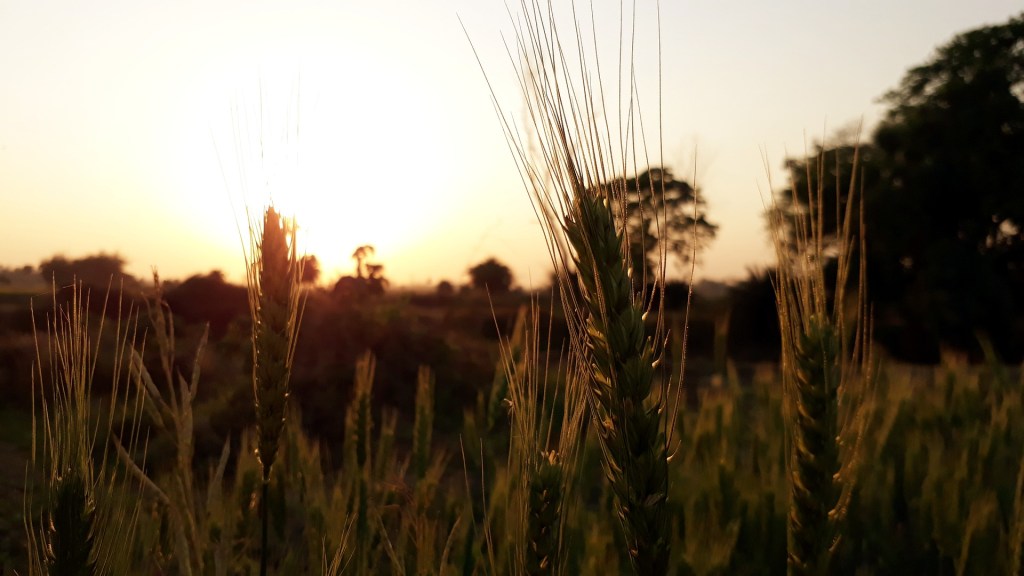
Today we hear another parable from the gospel according to Matthew. The kingdom of heaven is likened to a field wherein which wheat was sown, but overnight, an enemy comes and sows’ weeds. And so, the wheat plants and the weeds grew together, and the servants of the house asked, “Should we gather up the weeds?” Their desire to let the wheat grow and flourish was abundant. “No,” the head of the house said, “for in pulling up the weeds, the wheat too will be uprooted.” And at the harvest they will be separated. Jesus left the crowds, and if I let my imagination wander, I can imagine the disciples cutting their eyes to each other as they followed Jesus back into the house, before one of them bravely asked, “Okay, but what did that parable mean?”
Jesus’ explanation to the disciples all the components of the parable have direct representatives to this world. The good seeds are the children of the kingdom, the weeds are the children of the evil one, and the enemy who sowed them is the devil, obviously. While I didn’t grow up hearing this interpretation, I know that this passage is one used to defend and support predestination and the inherent evil in our world. Now it is not the time, to unpack a defense of why this is bad theology and scriptural interpretation, but I lament the calcified and cemented interpretations of some of Jesus’ words. I wish we could hear with the ears of children, listening as if Jesus had invited us to Circle Time, crisscross applesauce. I wonder what we would hear in this parable; what would we catch?
When I let myself wander through the parable of the weeds and the wheat, there are some things that stand out to me. In this parable, we hear the servants’ desire to help the field flourish, but they are quickly directed that it is not while the wheat and the weeds are growing that it is time to gather up them up and separate them, but at the harvest. This stands out to me because when I hear this parable, because it is so tempting in our lives to constantly separate the good from the evil, the wheat from the weed, but as the head of the house says, “they will both grow together.” It is impossible in the field of this world to have a mono-culture of goodness, in other words. And the delay of the gathering up these weeds stands out to me because I love a task, a to-do list, a check list, and if part of living a faithful life in this world was as simple as separating good from evil, there’s part of me that loves the idea of that. But no, that’s not the point of the field.
The point of the field, the point of our lives of faith is to grow. The wheat doesn’t get to decide how much of its soil is shared with the weed, but merely to stretch toward the sun, to receive the gifts of those who care for it, and then eventually to give the gift back to the community. What I am catching in Jesus’ parable is that the focus of our lives of faith is not to gather up and separate the good from the evil, but merely to grow, and to trust that at the harvest, at the end, all will be taken care of.
One of the important things to remember as 21st Century Christians living in the United States of America, is that every day we not only get to, but have to, choose our Christianity. It is shockingly easy to let our faith, to let our wheatiness, let’s say, become a default at the time and space where we live in history, but this would not be true to either the people Jesus was telling this parable to or to the first folks who would hear the Gospel according to Matthew as it spread throughout the region after Christ’s crucifixion and resurrection. Every day, my friends, we get to choose this life of faith, this community, this common call, and every day, beloveds, we have to choose to an active Christianity at a time when it is critical that we bear witness to the hope of God’s presence in this world.
When I listen to Jesus’ parable, what I catch is that the point of our lives of faith is to spend our time and common effort not parsing out who is right and wrong and trying to gather everybody up, but rather to grow, to be fruitful, and to trust that God is present in wilds of the wheat and the weeds. But what I hear when I wander through Jesus’ parable may not be what you hear, and I invite you to spend some time in this parable this week. And to ask yourself what does it mean to be an actively growing and changing Christian in your life? This, I believe is the point, for us to grow and change together, and to trust in God as we go along. And as our collect for today says, and is worth repeating, “Almighty God, the fountain of all wisdom, you know our necessities before we ask and our ignorance in asking: Have compassion on our weakness, and mercifully give us those things which for our unworthiness we dare not, and for our blindness we cannot ask; through the worthiness of your Son Jesus Christ our Lord, who lives and reigns with you and the Holy Spirit, one God, no and for ever. Amen.”


Leave a Reply