
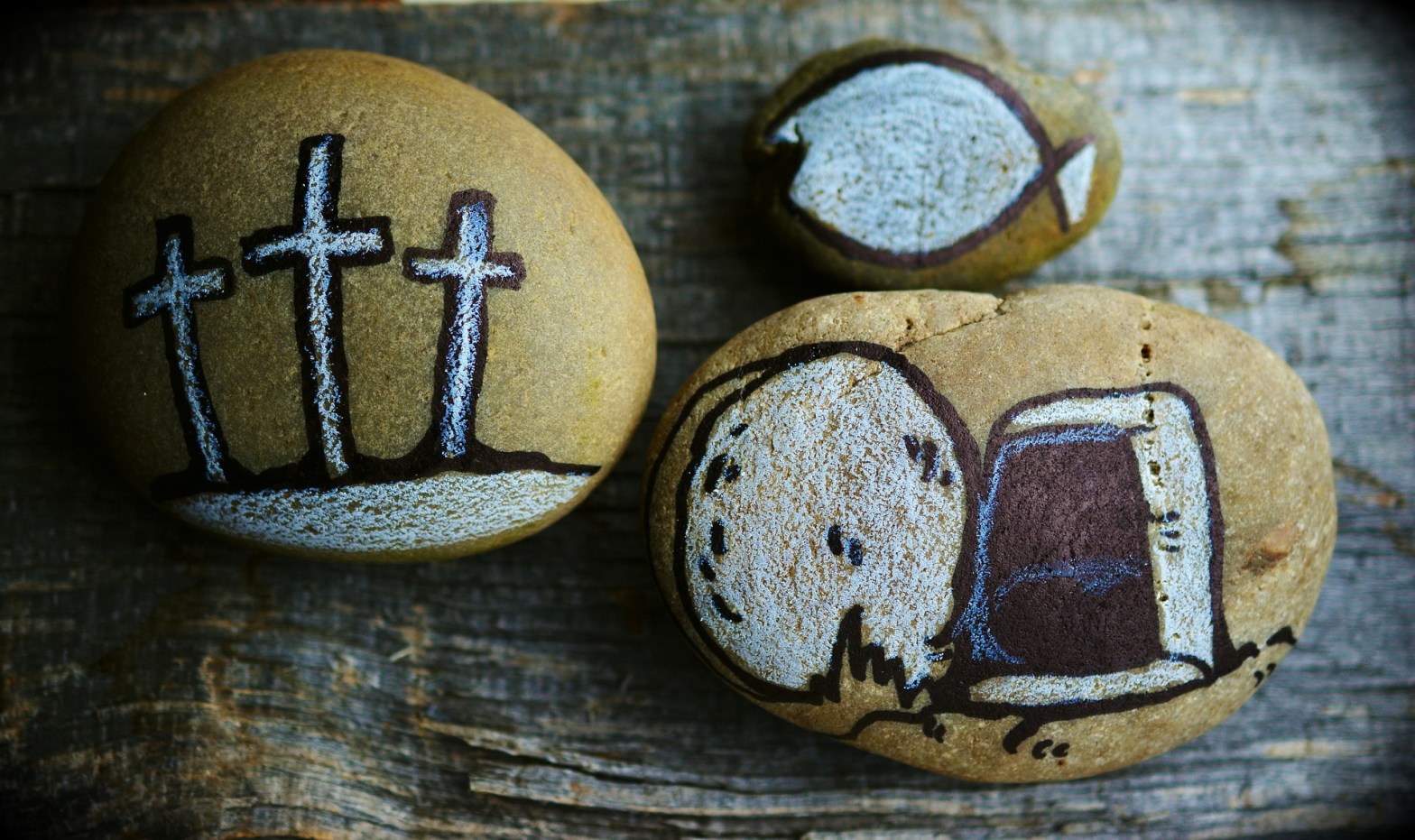
There is so much to love about Easter morning, but one thing I love about St. Mary’s unique tradition of offering the community a “glow in the dark” egg hunt after sundown on last night is that is true to what I love most about Easter: that Easter starts in the dark. I love Easter; I love the striking white lilies, the beautiful and holy music and the chance to finally give rise to all those Alleluias we’ve done out best to suppress throughout Lent. But the best part of Easter, in my opinion, is that it starts in the dark.
We see in our gospel lesson that the first day of the week is just beginning to dawn, and yet Mary and Mary find themselves at the tomb where Jesus’s body was laid just three days prior. The giant stone that sealed the tomb was rolled back with the earthquake and lighting bolt appearance of the angel of the Lord. The guards were frozen as if they were dead with fear. The angel of the Lord tells the women to not be afraid–classic angel of the Lord advice–that Christ is risen, and that the resurrected Christ will meet you and the other disciples in Galilee. The Mary’s quickly left the empty tomb to share the Good News that Christ is risen with fear and great joy, and the resurrected Christ greets them, and asks them to share the good news with his brothers, the disciples.
I wonder what Mary and Mary’s preparation to go to the tomb looked like? Did they pack a bag, carefully with supplies to care for Christ’s body? Were they worried about what the guards outside the tomb would say to them? I imagine the amount of courage it must have taken for them to venture to the tomb in the darkness of the early morning, still consumed with grief. I imagine the darkness of that early morning fading away slowly as they came to the tomb, then as the earth began to quake and the angel spoke to them, the day began to dawn. I love that Easter starts in the dark because it is so opposite the narratives and images of Easter that get pushed upon us today. Easter starts in the darkness of early morning, and also in the darkness of the grief and overwhelm of death.
We know that we can’t get to resurrection without death. Easter and death occupy the same space, becuase Easter and resurrection doesn’t happen without Good Friday and the crucifixion. We see it here in our gospel passage today, that Easter and death occupy the same space. And we see that Easter is personal for Mary Magdelene and the other Mary as they stand at the mouth of that empty tomb. Easter is personal to them, as they run quickly to share the good news with fear and great joy.
Now the point of this is not that the first preachers of the gospel of our risen Lord were women – though that should be noted – the point is that there was an urgency to Easter for the Marys. And Easter is personal for many of us here today. Maybe it’s the glory and joy of this beautiful Church on Easter morning that holds the truth of Easter for you, or maybe you’ve most experienced Easter in a hospital room or at the grave or in the early dawn after a restless night. The thing that we learn from our gospel passage today is that Easter and death occupy the same space.
Easter and death occupy the same space in a war-torn world, consistently in chaos. Easter and death occupy the same space when natural disasters hit and neighbors rise up and take care of each other. And Easter and death occupy the same space in each of our lives when we feel that we cannot press on and we find some measure of courage. Because Easter and death occupy the same space beacuse death is the only place where Easter is needed.
Easter certainly didn’t come last week as Jesus triumphantly entered into Jerusalem–no, rather, Easter came in the darkness shared between two women at an empty tomb in the waves of grief. Just as Easter and death occupy the same space, Christ has conquered death and death has no more power, but this isn’t to say it won’t be painful. Death is so very painful, sin causes us to inch ever closer to the darkness of death in our lives and it is without a doubt difficult, but that’s not the end of the story. We know how this story ends. We know that Jesus rises and we know that at each and every grave we give rise to our cries of Alleluia, Alleluia, Alleluia!
So, go out today and follow Mary and Mary’s example, because it’s not until they share their own story of Easter and death with fear and great joy that the others know what is true. Because it’s not until we go out and tell others what we believe that they can know why we make our cries of, “Alleluia!” when so much of this world is dark and painful. Because it’s only in the light of the resurrection that this world makes any sort of sense, and the only way forward is to hold on to the glorious hope that the Lord is risen. We know, with that same fear and great joy that Mary and Mary had, that the Lord is risen indeed! Alleluia! Alleluia!
A sermon delivered on Easter Day, April 5, 2026, on Matthew 28:1-10 to the people of St. Mary’s, Episcopal Church in Middlesboro, Kentucky.

 Becca Kello