
This week as I prepared to get my hair cut for the first time since moving to Lexington, I braced for the task that many introverts fear: the haircut small talk. But in my forty-something years of life, I’ve chosen to lean into what makes me me, and I don’t tend to spend much time with folks in the shallow end of the conversational pool; they either swim with me to the deep end or we settle into a comfortable silence. It didn’t take long, then, for me to get to the place with my new hair stylist to start to talk about the hopeful future of Kentucky and the resiliency of Appalachia. We talked about natural disasters and how Kentuckians show up for each other, and how the concept of “mutual aide,” a new concept for some in our country doesn’t need to be taught in the hills and hollers because, frankly, most communities here never had the choice to do anything but help each other out. I couldn’t help but think of this conversation as I prayed through our lesson from Book of Hebrews, our second reading for today.
Now, the thing about our holy scriptures is that each of us comes with a variety of experiences, baggage, and expectations when we listen to and read our scriptures. Each book of the Bible, we know, is one of a variety of styles of writing, to a diverse group of people, and across a huge swath of humanity’s history, so to read it straight through as a direct parallel is rarely, if ever a wise choice. And the Book of Hebrews is one of the books of our New Testament that has an undefined authorship, though some scholars credit St. Paul, and it was likely written around the time that many of Paul’s other Letters were written, around 60 – 70 A.D. It’s likely written to group of relatively young Christian community who are wrestling with how to live out their faith, what Jesus’ Messiahship means in the wake of the crucifixion and resurrection, and how the sheen of easy answers begins to wear off.
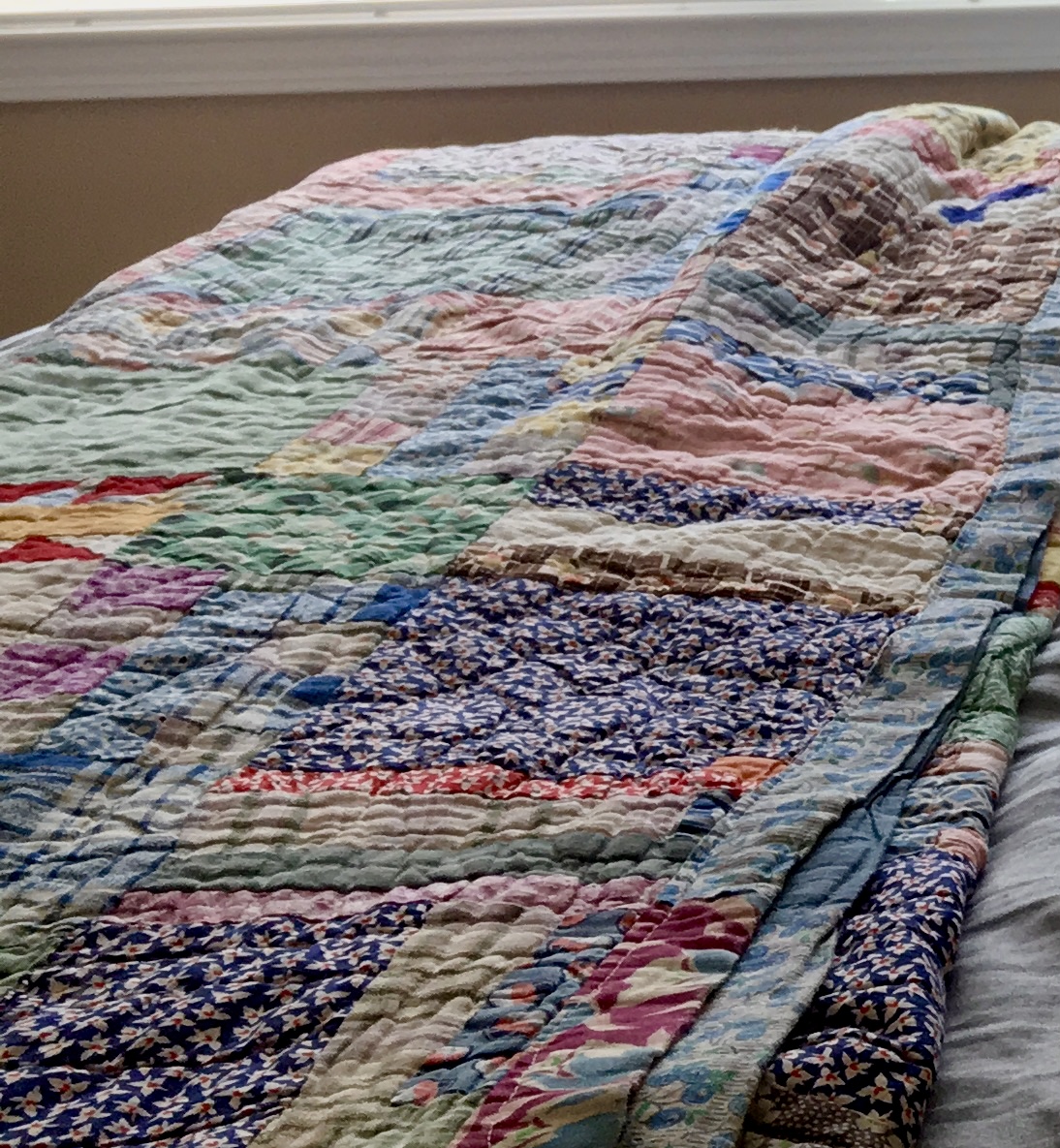
And today’s passage, depending on what you bring to it, might sound or feel like a variety of things. For some, it will sound like a burdensome list of dos and don’ts of doing Christianity with enough to keep it going. For others it might sound like a pie-in-the-sky list of a best-case scenario of what it means to be in Christian community. To me, the image that came to mind is that it feels like look looking at an intricate quilt. Maybe one of those precise and beautiful quilts that weave texture, depth, and color to make not only a practical thing, but in its making, they make it precious in its beauty. But our passage also reminds me of a quilt that’s more precious than any quilt that might ever be found in the National Quilt Museum in Paducah: the quilt that my grandmother made from mis-matched fabric scraps and heavy cotton batting. It’s a product of depression-era skills, not a finely tuned craft. The rectangles are not the same size, the fabric patterns have no rhyme or reason, but they are woven together in a way and by a person more precious to me than any other quilt ever could be.
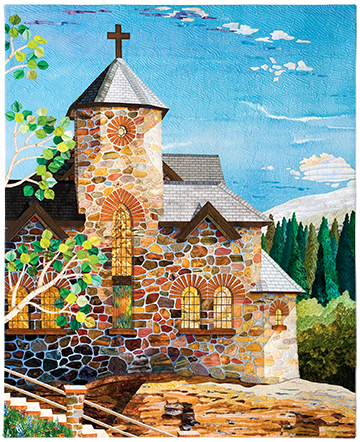
(and a real quilt)
The way the author of Hebrews switches from subject to subject feels as scattered as my grandmother’s fabric choices: let mutual love continue, show hospitality, remember the prisoner, honor marriage, and keep your lives free from the love of money. There is no long, cohesive teaching on any of these—pretty important—topics, but in some ways, does there need to be? The cohesion comes in how these important life tenants are lived out together, that they are woven together by Christ followers, no matter what comes our way.
The work of us Christians, then, is built upon this foundation of a community that weaves together a response to God’s call upon us to care as deeply for each other as we care for God. For us to find and cultivate spaces where mutual love can flourish, where hospitality overflows to strangers, where our compassion—our ability to suffer with—extends not just to those we see, but those who are hidden by from our view by prison walls. The work to which the author of Hebrew’s has invited us here is that we support our friends and neighbors who have entered into the sacrament of marriage and those who remain single; where we collectively lean against a culture of more and more and more, and help each other remember that no matter the messages of the world, that Jesus Christ is the same yesterday, today, and forever.
The calling of today’s scripture is that we care deeply for each other, and one of the things that I think is the hardest truth of being Christian in 2025 is just how easy it is to passively not care. To be unengaged in the work of our communities, going about our business, helps the walls of the prisons hide the prisoners to which Christ specifically asked us to be with, just for one example. For so many of us, this world is deeply heavy and painful and it is hard to keep looking toward the suffering of others, but then I think back to how this passage ends. “Do not neglect to do good and to share what you have, for such sacrifices are pleasing to God.”
And I think about those two quilts: one precise and gorgeous and the other tattered and special. Sometimes doing good in this world will be with committees and systems and lots of people to create systemic change, and sometimes, it will be a tattered quilt of God’s people woven together by doing good and sharing what they have in the name of mutual love. One is not better than the other, and no community will be the same through the years. St. John’s is doing both, answering God’s call to and with each other, and you all remain in my prayers, so that God will empower you to continue this work of mutual love so that you can do good and that you may share what you have to all you encounter, thanks be to God.
A sermon delivered on August 31, 2025. to the people of St. John’s Episcopal Church in Corbin, Kentucky on Hebrews 13:1-8, 15-16 for Proper 17C.

 Becca Kello