
My paternal grandmother had this habit; having grown up in the foothills that rolled off the Appalachian Mountains in East Tennessee, she was barely educated. When I went off to college, my folks had a bit of advice, as parents are known to do. Their advice was to write my grandmother hand-written notes. I picked up this habit, and once every two weeks I would write to her about my classes or the weather or some other entirely uninteresting information. But nevertheless, shortly after this letter had been sent off in the mail, I would open my campus mailbox and see a small flimsy envelope with my grandmother’s unmistakable and wobbly cursive writing. Each new envelope, I quickly realized, was comically predictable and always ended the same way. Part prayer over my time, part request and warning that I value what she never got to experience: read you Bible and stay in school.
The story of who we are is very often told by telling the story of those who have come before us; those who write predictable letters in the same faint script. Those who pray for us to remember the foundation upon which we stand and to be grateful for the opportunities we have been given. The story of who we are is told, at least in part, by telling the story of our ancestors. In our second reading today, the author of Hebrews tells the story of the people to whom they are preaching. These people have passed through the Red Sea, they made the walls of Jericho fall, Rahab, one of their own, played a significant role in their deliverance. Time, the author says, is limited, because to tell the story of every person of faith who has played some significant role in the history of the people would be to go on forever; all these people, their failures and their successes, their pain and their joy, have all worked to bring the congregation to where they stand right now. It is, indeed, a very great cloud of witnesses. In light of those who have gone before, and with Jesus as our example, we have all that we need to continue in our faith, to continue to run the race set ahead of us.
The book of Hebrews, it is important to point out, is not a letter like one written by my grandmother or one we often hear on Sundays, but rather is a sermon. It is a sermon to people who were tired, to a people who were struggling, and to a people whose faith began to waiver. Among many other things covered is the reminder of who these people are, from where they come, and what will sustain them for the journey ahead. Today we hear a litany of champions of faith to whom these people can look to remember that keeping the faith is important and worth the difficulty. But this list of people is not a list of folks who never failed or who never faced struggles, no this a list of people who were mocked, flogged, and imprisoned. They were stoned to death, sawn into two, and killed by the sword; they wandered in deserts and mountains, and in caves and holes in the ground. Yet, these – these are the people to whom the author of Hebrews points as those who were commended for their faith.
I am grateful for the connection of the Holy Spirit and the Lectionary, because this week, I have spent quite a bit of time digging into the 2016 History of Milestones of St. Andrew’s from 1880 to 2016: A History of Hope and Faith, dedicated in memory of Dr. Austin Tuning and in honor Mrs. Elva Davis that was shared with me by the Rev. Carol Ruthven a few weeks ago. Before I was even aware that we would hear these from Hebrews about the great cloud of witnesses, I was deep in the names and narratives of those who have stood in this spot and behind this altar and sat in these pews.

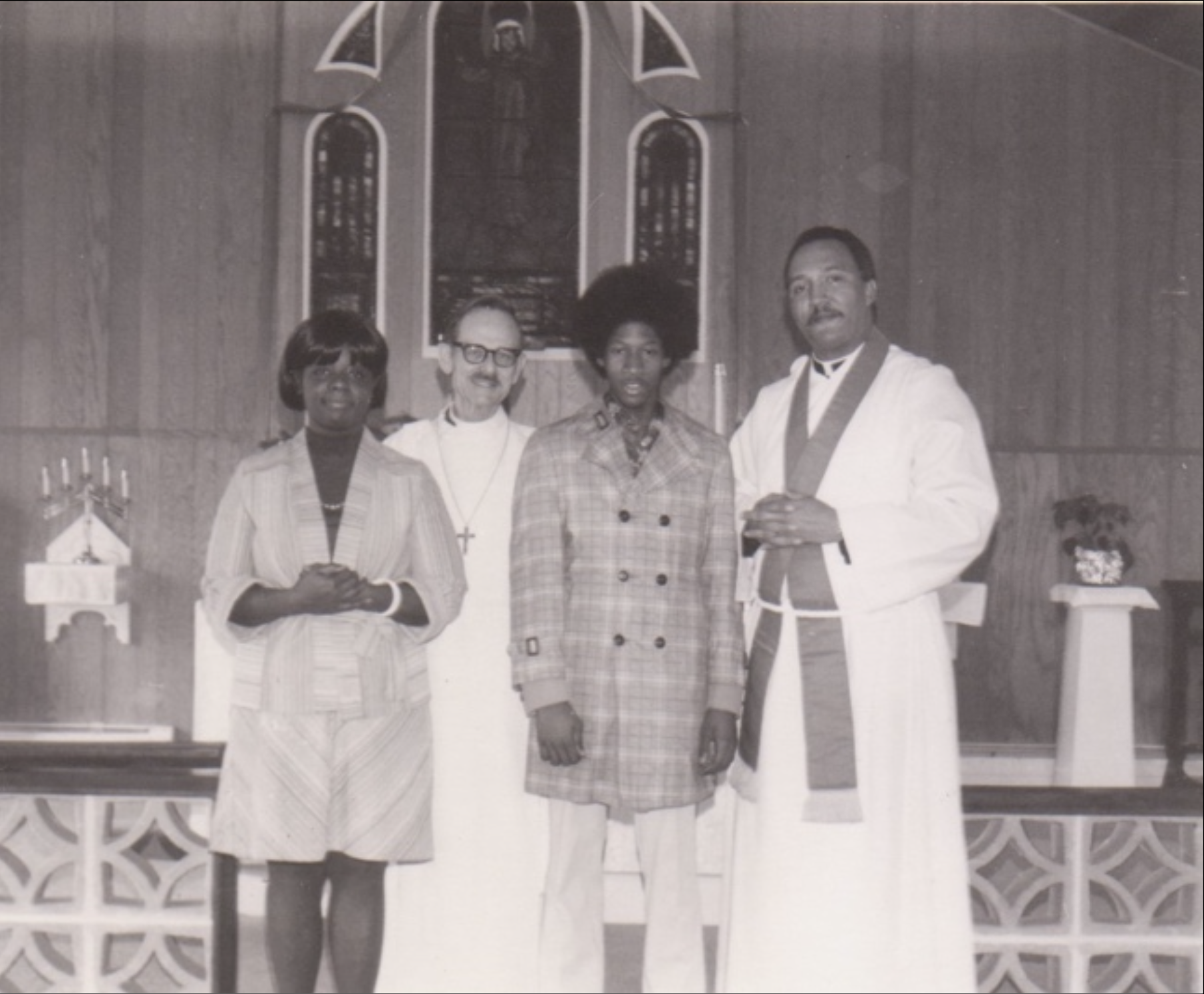


I got to learn about the Rev. Erasmus Lafayette Baskervill, who served this faith community from 1909 to 1912 as it moved being St. Andrew’s Mission to St. Andrew’s Church in 1911. I read of the spiritual agility and long leadership of the Rev. and Mrs. William and Lillian Brown who led St. Andrew’s from 1930 to 1959. And I saw pictures of Father Ross and Father Bryan, priests who served in the 1970s posing with newly confirmed young adults with Bishop Hosea. But more importantly, after the narrative of the history of St. Andrew’s, of the times of being a mission church or a parish church and priests and deacons who flow in and out.
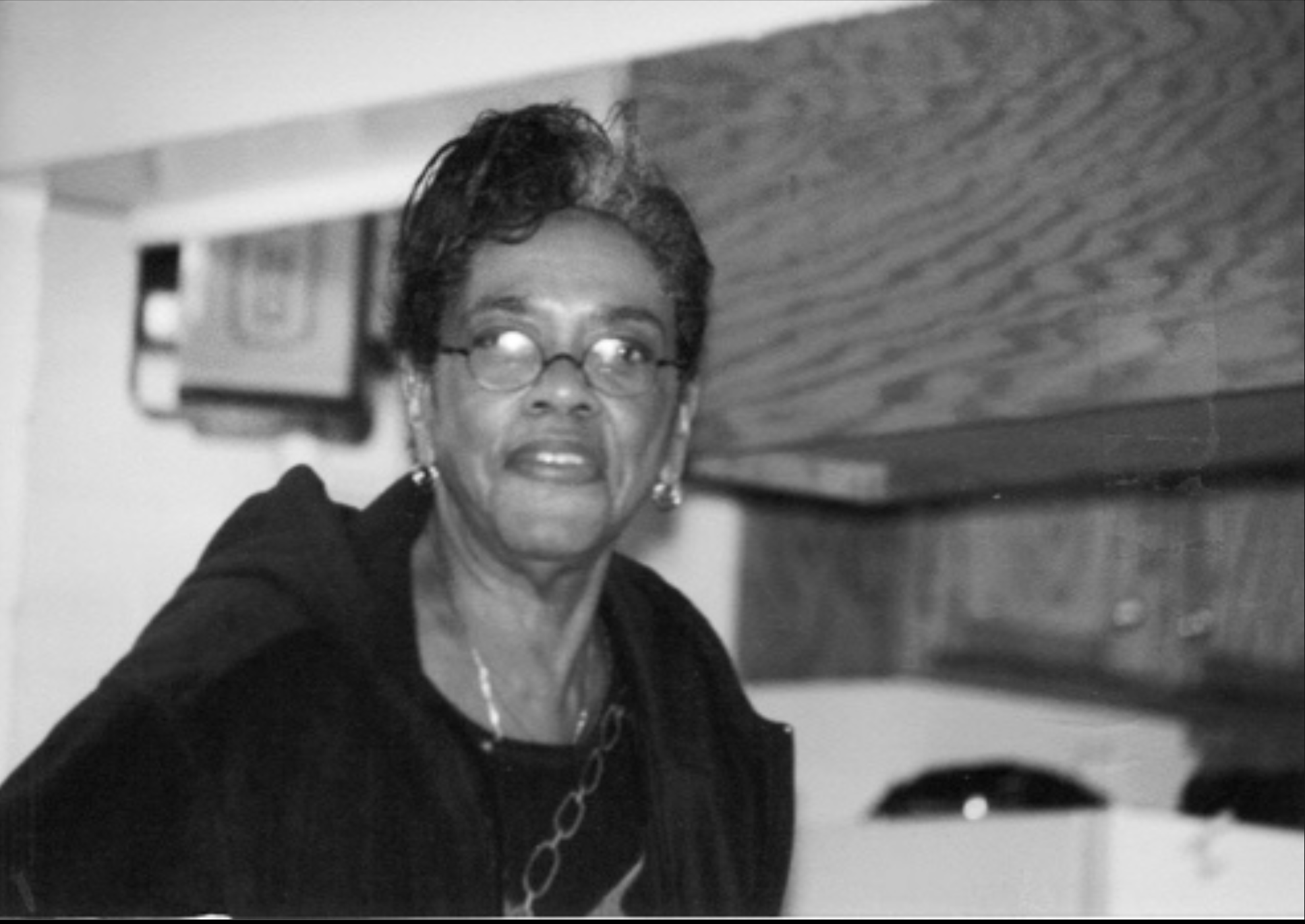
And more importantly, at the end of the history, there was a series of biographies of St. Andrew’s parishioners, and I got to read, among others, of Mrs. Edythe Spotts, who had a particular gift for prayer and researching Bible passages. And of Mr. Bibi Zinnah Roberts, Sr. who seemed to give as much from his garden as from his heart and specifically grounded his days in prayer. And I got to read about Mrs. Frances S. Smallwood, a St. Andrew’s member for more than half a century, who on her deathbed quoted to her son, “I have fought the good fight, I have finished the race, I have kept the faith.”
In the Christian walk, there is a risk that we won’t get it right all the time or, if you are like me, a thousand other worries about how we might miss the mark. And in our walks of faith there is the risk of feeling like the race isn’t for us, because this life of faith requires endurance, and maybe there is a weariness in our body and spirits from the weight of the world today and the struggles of carrying on. There is even danger, in a beautiful place like St. Andrew’s, where we stand on the shoulders of giants and among a truly great cloud of witnesses, there is a danger to forget that the call upon our lives is not just to keep running.
No, my friends, we are called to run to proclaim hope into the saddness of this world, to offer a whisper of encouragement to those around us who are just as tired as we are, that this world is meant for something more. And no matter how you find yourself this morning, I hope you hear this truth, we are better Christians because of Rehab, the prostitute who stepped out in faith and helped the people of Israel, and I firmly believe that generations from now, someone will be a better Christian because of the lives of faith that have walked through St. Andrew’s. So, continue. So, continue in your faith and lay aside every weight and the sin that clings so closely, and let us go out and run with perseverance the race that is set before us, and let us run to proclaim Christ’s hope.
A sermon delivered on August 17, 2025 to the people of St. Andrew’s Episcopal Church in Lexington, Kentucky for Proper 15C on Hebrews 11:29-12:2.

 Becca Kello