
One of the things I did while on sabbatical last year was to spend some time digging into my family’s genealogy. What I learned about myself through this family exploration is that very often, there are things deeply woven into our being that only take on language as we tell the story of where we’ve been, and usually how we got where we are.
Today marks a special day in the liturgical calendar that has been celebrated less than 100 years of our Christian history. In response to the vitriol and violence of World War I, Pope Pius XI created today’s liturgical holiday, but it wasn’t until 1970 that it was move from October to the today as we to cap the end of the Season after Pentecost before we enter Advent. The efforts of this day were to invite Christians to see beyond the violence and rhetoric of war toward a Christ that became King not by conquering peoples in the darkest moments of their lives, but by meeting them where they were. The hungry, the poor, the oppressed, the imprisoned, these are those with whom Christ was especially concerned. And since then, it’s been a day to ground ourselves in the true Kingship of Christ.
Except, at least for me, I grew up in a family system that was deeply formed by abandoning all Kings and Queens as they settled into the foothills of the Appalachian Mountains. My family history work helped me realize that the discomfort around royalty or even of social class and wealth are not ideas that I have plucked out of thin air, rather, they are the byproduct of deep familial roots and stories, told and untold, about where we’ve been, where we are, and where we might be going. Maybe this is why the kingship language around Christ, especially a whole liturgical holiday to celebrate it just never seemed to connect to me.
Last week in his sermon, Father Steve asked you to add to your theological vocabulary the word “icky,” and I have a less useful, but equally important phrase to add to that vocabulary: atonement theory. Atonement theory is like the deeply woven stories of my families’ history: whether we know the story of how we believe what we believe or not, each Christian holds a particular atonement theory. It’s an explanation of who Christ was and what Christ came to do; atonement theories attempt to explain how and why Christ atones for our sins. Maybe for you, this question feels so obvious that to ask it feels….icky.
The theory that accompanied me my whole life was one that posed an answer to the question by claiming that the point of the cross was so that Christ could subvert the wrath of God. I don’t even think anyone ever articulated those exact words to me, but I am deeply convicted that when it comes to faith formation more is caught than taught. I was surrounded by narratives that God was a vengeful, wrath-filled God, and the only thing that stood between me and eternal damnation was the blood of Christ. Early on in my faith I would have said that my sense of atonement theory was that Christ died on the cross to save humanity from God.
But this does not align with what I know to be true about the Trinity or Christ or this world, because the idea that it was the wrath of God that drove Christ to the cross is far less plausible than the idea that it was the wrath of humanity. Maybe your own atonement theory aligns with the wrath of God, and I genuinely believe that not all of us have to have the same answer when it comes to articulating why Christ died on the cross, because I don’t think that there is one singular correct answer.
Why did Christ, the son of God, die on the cross? When I let my mind wonder about this question, I realize that my personal atonement theory is one that finds its home directly on Christ the King Sunday as we stand on the cusp of Advent. Because I believe in a mix between Incarnational Atonement and Christus Victor. Incarnational Atonement is the belief that Christ came not just to die on the cross, but also do live a radical and compelling life which so upset the wrath of humanity that they would rather murder the Christ than face the inclusion and care that he preached. Christus Victor is the belief that Christ is victorious over evil and death.
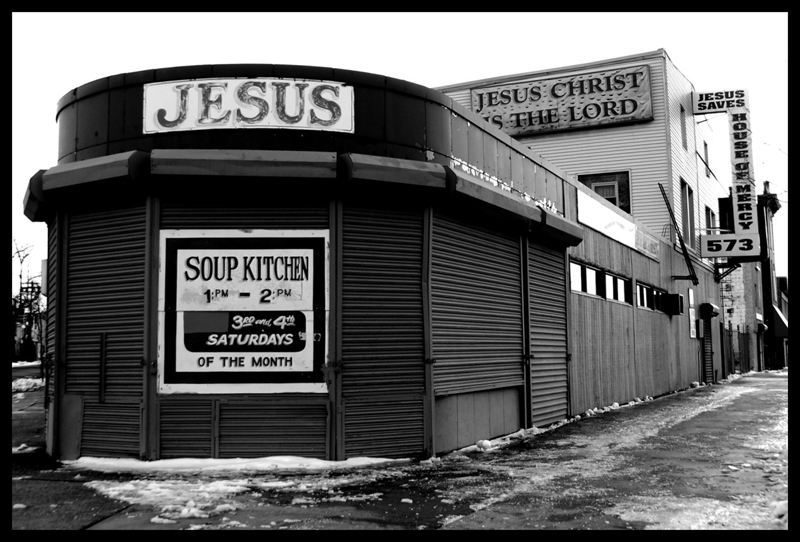
Maybe it’s the media I’ve consumed but Christus Victor conjures up a movie poster like image in my mind of a man in Roman military gear from the first century surrounded by dust and fire with a grimace on his face, but the difference between what we imagine about a victor, or a king and Christ the King is kind of the point of this whole holy day. Christ came into this world in the most fragile and chaotic ways imaginable, he lived as a Jewish person, often persecuted by the powerful and wealthy, so to me, Christus Victor as an atonement theory is less about Christ winning and more about the truth that today brings to us: that for Christ to be King, the realities of this world must be turned upside down. Because Christ is not a king of gilded castles and bejeweled crowns sitting in a lofty throne, but rather Christ the King is in the prison cell or next to those sleeping on the streets.
So, the question that Christ the King asks of us is what does it mean for our faith that the one who we follow is not the King of wealth and power and privilege, but of the poor, the sick, and the imprisoned? What does it mean for our faith to be guided not by the kings of history, but Christ the King. I believe it means that we are called to a life that’s deeply invested in the liberation of all, a life of faith that is moved first by compassion, and a life of faith that celebrates the arrival of the stranger. To celebrate Christ the King is to celebrate the truth of the kingdom of God, that all who find themselves hungry or imprisoned or exiled will experience the love of God with Christ as King.
A sermon delivered to the people of Christ Episcopal Church in Bowling Green, KY on November 26, 2023 for Christ the King Sunday.
Image Source: Fischer, Tony. Jesus Feeds the Hungry, from Art in the Christian Tradition, a project of the Vanderbilt Divinity Library, Nashville, TN. https://diglib.library.vanderbilt.edu/act-imagelink.pl?RC=57785 [retrieved November 27, 2023]. Original source: https://www.flickr.com/photos/tonythemisfit/3254449443.

 Becca Kello