
In the Fall of 2019, the Rev. Michael Vollman, who ministers to Trinity Episcopal Church in Russellville, Kentucky, invited a small group of clergy from the western half of our diocese for a tour of the SEEK Museum. The SEEK Museum[1] works to uncover the stories of enslavement, freedom, equality, and justice for Black folk in West Kentucky. Volunteer Historian, Michael Morrow, told us stories about how the museum came to be, what stories they want to tell, and gave us a tour of the museum that spans across seven buildings in what used to be known as “The Bottom” of Russellville, as well as the Bibb House. I highly recommend this tour, because more than four years later, I’m still thinking about all that I learned from Mr. Morrow. One part of the tour that struck me the most was the lynching memorial. As you step into a small house, nearly all of it is occupied by a tree with four nooses hanging from it. It is a jarring beginning to the story of four men who were lynched on the morning of August 1, 1908.[2] When Mr. Morrow first learned about these lynchings from his grandmother as a child, he promised her that he would tell the stories of the brutual death of these men.
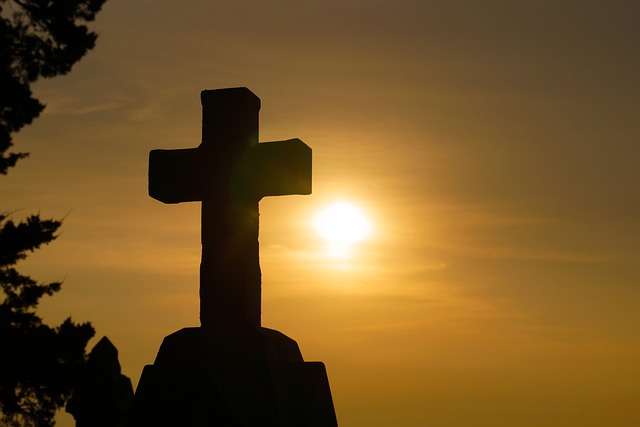
Ever since I read James Cone’s book The Cross and Lynching Tree, I cannot hear or think about lynching without connecting it to the cross: both made from wood, both instruments of the state to torture and kill those who were deemed unworthy of life, both used largely on ethnic and racial minorities. When I walked into that section of the museum with the lynching tree, I thought how about Christians around the world center the cross as well. We do not carry in the cross or bow the one behind the altar to honor the violent killing of our savior, but rather, as an opportunity to remember how not even that violent death upon the cross could stop the message of Christ. Just as that lynching tree in the SEEK Museum serves to remind of the painful past and the hope of the future, so do we center the cross as a sign God’s hope, and to help us recenter ourselves upon all the reasons that Christ was crucified.
For Saint Paul, there is truly no greater or more important aspect of Christianity than the crucified Christ. Our Epistle passage today from Philippians, features what theologians have, over the centuries to call the “Christ Hymn.” It’s one of the most beautiful and succinct explanations of the Messiah that we have in the New Testament. Its words are woven throughout our prayer book, so even if you don’t recognize it as a while, I’m sure some of the words ring familiar for you. It’s a text we hear every year on Palm Sunday as we begin our Holy Week journey. And although, Paul wrote many letters to many specific churches, I think the piece of advice that is most applicable to all churches, is what we heard read today.
Now, I’ll say this near every time I preach about Paul just in case this is the first time you’ve heard me preach on it, but I have a hard-won love for the writings of Paul. I’ve had Paul’s words cherry-picked and quoted at me as a way of trying to literally silence me, but the truth is that even with all the bad experiences I’ve had with the misuse of his words, I so dearly love Paul’s love for the cross. In our epistle lesson, we hear not only the Christ Hymn, but also Paul’s pleading with the church at Philippi to lean into a life so deeply shaped by the cross that even in heavy and hard circumstances, they know the right thing to do. He urges the people to be humble and to focus not only on their needs, but that of others; in other words, he’s asking them to live a cruciform life.
To live a cruciform life is to simply live a life that is shaped by the cross. We Episcopalians have plenty of reminders of the shape of the cross in our worshiping life. It’s on the black Book of Common Prayers in front of you, it’s behind the altar, and many of us make the shape of the cross across our bodies at specific moments in the service to remind us that the central thing to our lives as Christians is the cross. What Paul is asking the church at Philippi to do, and I think what God is calling us to today, is to live not just an individually cross-shaped life, but to live a communal cruciform life.
I’m not sure exactly what was going on in and around the church at Philippi when Paul wrote this letter to them, but I am pretty sure part of the reason we’re still reading it thousands of years later is because it holds some fundamental truths. We do not have to let our imaginations run to wonder about what it feels like to live in a time and place where the pressures of the world around us feel too heavy. We do not have to bridge a gap of experiences to wonder what it is like for our focus shift away from the humility and self-sacrificial love of the cross to the problems of this world, or at least, I don’t have to reach too far.
In many ways, being a Christian in our part of the world isn’t necessarily counter-cultural in the way that it was for the church at Philippi, but I dare say that living a cruciform life is just as counter-cultural. The question that I hear in our passage today is, “how will we build our future together?” Because all the pronouns Paul uses are plural, and while we each must cultivate our own faith, it is vital to remember that Christianity is a communal religion. And because Paul is so deeply convicted not just by the resurrection of our Christ, but by the crucifixion as well, he urges us to build this future around the shape of the cross, and to do it together.
And while I’m not writing letters to churches far and wide like Paul, it’s important for me to name that there’s no way, as your priest, to stand in this pulpit and tell you exactly what this will look like. I cannot give you a checklist of rights and wrongs because this cruciform life to which we are called is only one in which we can envision together. But the thing I hold in my prayers for this church, and I invite you to as well, is that can live a cruciform life together, that we can have eyes to see and ears to hear collectively, and that we can act boldly, as it is God who is at work within us, enabling us both to will and to work for God’s good pleasure. Amen.
A sermon delivered to the people of Christ Episcopal Church in Bowling Green, Kentucky on Philippians 2:1-13 for Proper 21A, October 1, 2023.
[2] https://www.wkyufm.org/arts-culture/2018-06-28/kentucky-lynching-museum-opened-10-years-before-new-montgomery-memorial

 Becca Kello