
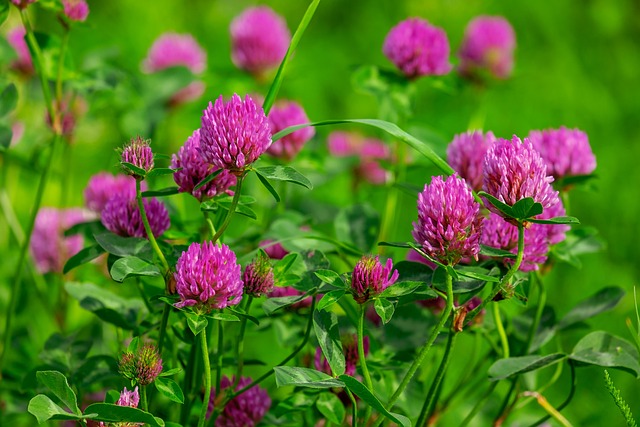
It happened with such regularity that by the 3rd or 4th grade, both my parents and I planned on it. I was such an anxious and shy child that every first day of school, from kindergarten to my first day of classes in college, I went home, my body and mind so tangled with anxious, perfectionistic worry that I would get sick as soon as I got home. I was an anxious child who struggled to contain the worries that everything wouldn’t be in place as they should, and I was an anxious teenager who found so much connection to my spiritual life and to the life of the church that I would often turn to the passage we hear today from Luke. I would read and reread, trying to figure out how to be the best at not worrying, to analyze what’s the correct way in which to consider the lilies of the field. But that kind of scripture deep dive never gave any answers nor, regrettably, any relief, because that is not the point of what Jesus is saying here to his disciples. This is not a road map out of overwhelm, but rather a statement about who God is in a world that requires, demands, and benefits from us forgetting that God’s provision and care are undeniably abundant.
Now, whether it is the surprisingly and always fitting arrival of Psalm 23 or the story of one of our Christ’s healing miracles, I have often found that the Lectionary cycle seems to always come through with some sort of divine support given the current events. So much so that when it seems like scripture passages or particularly prayers in our Book of Common Prayer have been cherry picked for a particular day, I have come to respond with a simple, “the Lectionary provides.” And since I get to be with you good people today and St. Raphael’s is doing the Season of Creation Lectionary for the month of September, I guess I’m going to have to extend that to, “the Season of Creation Lectionary” also provides. Because from Paul’s letter to the church at Corinth begging them to set aside their divisions about who is their leader in exchange for following the crucified Christ to the pastoral scene of nature living in harmony with each other from Psalm 104 to Jesus’ reminder to the disciples in Luke. One thing is clear after a tumultuous week: God deeply and profoundly cares for this creation, and of course, God deeply and profoundly cares for you.
I imagine that for some of you this passage is a comforting reminder of the simplicity of all things, and for others it is a maddening observation that only throws the pains of our human realities into starker contrast, especially this week in which violence has swept our country. This passage is not about dismissing any of our worries because when we trust and lean upon God all will work out toward our benefit. No, if we look toward creation as Christ invites us to, to look to the raven and the lily and the grass in the field, we know that all of creation struggles in one way or another, but Christ’s point here is that God has so brilliantly clothed this world, wouldn’t God do the same for you. That the abundance of wildflowers exists for all of the earth’s mutual care.
Perhaps it’s my over familiarity with this passage, but I found it helpful this week, especially for the last half of our reading, to read from a version of the Bible called The Message,
“What I’m trying to do here is get you to relax, not be so preoccupied with getting so you can respond to God’s giving. People who don’t know God and the way he works fuss over these things, but you know both God and how he works. Steep yourself in God-reality, God-initiative, God-provisions. You’ll find all your everyday human concerns will be met. Don’t be afraid of missing out. You’re my dearest friends! The Father wants to give you the very kingdom itself.”
There is something so true and grounding in the translation, “Steep yourself in God-reality, God-initiative, God-provisions.”
A dear friend of mine once told me that he when he got a dog at the beginning of COVID, it made him wonder if this is how God felt about us humans. Deep love, sometimes exasperation at repeated and difficult choices, but irrevocable love and a desire to provide. I have taken this line from a friend and let it resonate with me, and sometimes I will watch animals as they move through this world, whether my own dogs or squirrels or birds or videos of bears making silly choices, and wonder if this is a sample of God’s divine love that overflows for us and for all of creation.
This reminds me of Mary Oliver’s poem Wild Geese, which I want to share with you all:
You do not have to be good.
You do not have to walk on your knees
for a hundred miles through the desert, repenting.
You only have to let the soft animal of your body
love what it loves.
Tell me about despair, yours, and I will tell you mine.
Meanwhile the world goes on.
Meanwhile the sun and the clear pebbles of the rain
are moving across the landscapes,
over the prairies and the deep trees,
the mountains and the rivers.
Meanwhile the wild geese, high in the clean blue air,
are heading home again.
Whoever you are, no matter how lonely,
the world offers itself to your imagination,
calls to you like the wild geese, harsh and exciting–
over and over announcing your place
in the family of things.
Today is an invitation to steep ourselves in God-reality, God-initiative, God-provisions. Whoever you are, no matter how lonely, to begin remembering God’s love for creation, including you. So that we can extend the same love and care to those with whom we share this world. May God give us the strength and will to do so.
A sermon delivered on September 14, 2025 to the people of St. Raphael’s Episcopal Church in Lexington, Kentucky on Luke 12: 22-31, following the Season of Creation Lectionary.

 Becca Kello