Before I went to seminary, I taught preschool, and I’m so grateful for those years. I loved that time of life and I’ve been able to carry so many lessons from that work. Whether it’s having to use my teacher voice to get attention, or my knowledge of universally beloved children’s books, or the way in which gathering up four-year olds is remarkably like gathering up any group of people, regardless of age. There is one book that is a preschool staple that is visually interesting, engaging counting skills, and incorporates themes of change and growth: The Very Hungry Caterpillar by Eric Carle. The caterpillar, who is in fact very hungry, eats not just through the leaves around him, but also an abundance of other fruits and vegetables and even cakes and lollipops and pickles and ice cream, and then he makes a cocoon and emerges changed as a butterfly. The food, though perhaps too adventurous for a little caterpillar, was necessary for him to take on such a big transformation and change. It is a classic tale because it has a surface story, but also a deeper meaning, like all great stories; on one hand it is a silly story about an insect eating giant amounts of human food to explaining the ways in which we must prepare for big changes if we want to really be ready to embrace and undergo the transformation that they will bring.
Thinking about this beloved tale reminded me of a phrase that comes up in one of our collects later in the year that we often return to, it says that when it comes to God’s holy word, we pray that we might “read, mark, and inwardly digest it.” It’s a way of holding a hope that our holy text will become so important to us that they will be like the leaf to the very hungry caterpillar preparing for us for a metamorphosis into a Christian life. We pray God’s holy word might sustain our very being. It’s a beautiful and poetic way to put it, and it paints a picture of intimacy with scripture that is hard to describe with literal and direct words. “Read, mark, and inwardly digest,” it’s a beautiful phrase.
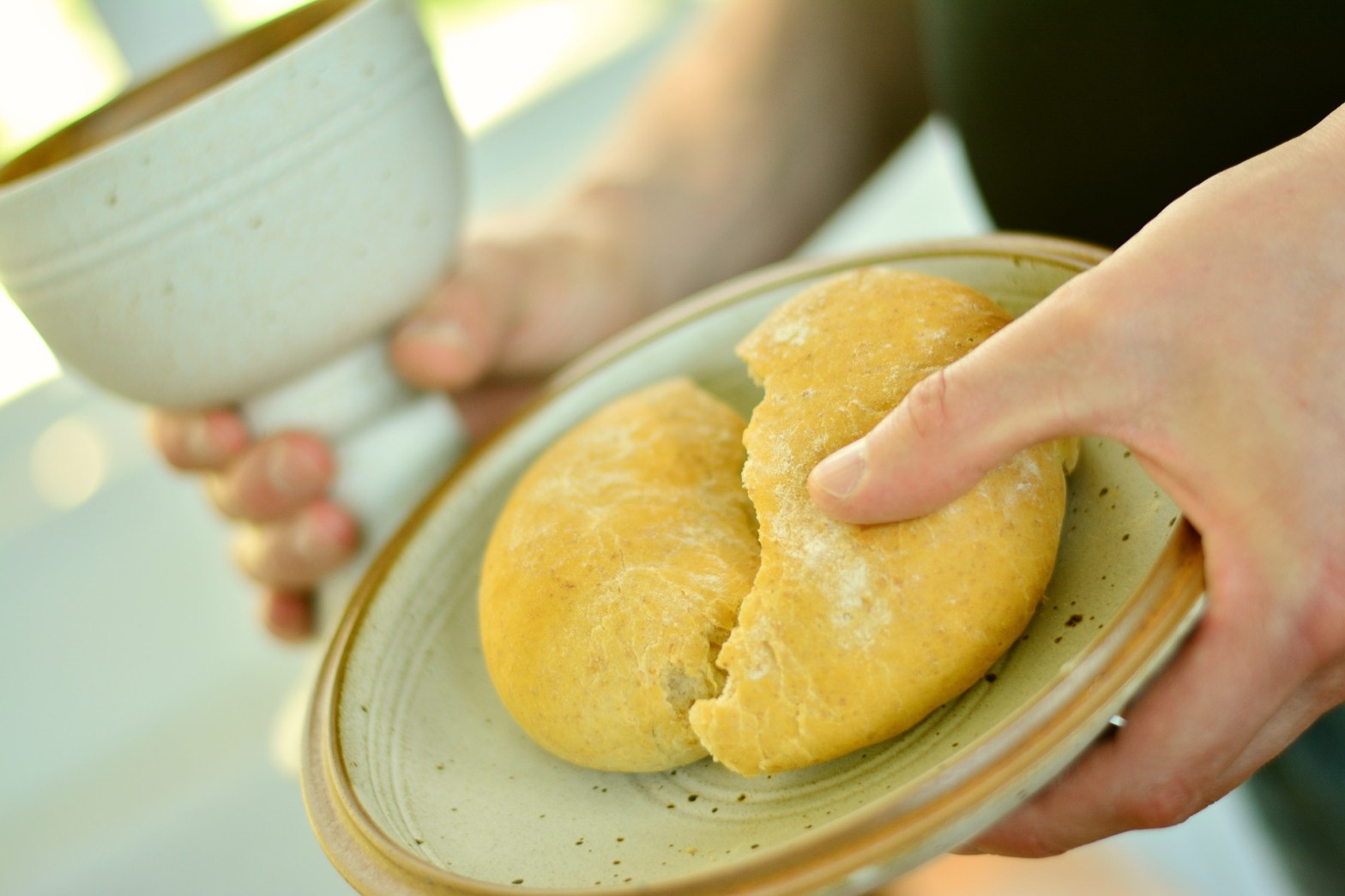
This Sunday ends a series of five Gospel readings affectionately known as “The Bread Weeks;” since the end of July, our Gospel lessons have wandered through John chapter 6, sometimes overlapping as Jesus offers teachings on what it means for him to be the Bread of Life. When a congregation like ours, who has the privilege of having multiple preachers in the pulpit, we preachers must do some coordination and conversation about what might come up and if we might accidentally preach the same sermon two weeks in a row. But this week, as we end the series of bread discourse, I actually thought about that very hungry caterpillar and how we pray that might so devour scripture that it would be our sustaining life force. And I thought about how for some, the language of Jesus’ body and blood is so heavy and complicated, yet for others they do not give this language a second thought. And then I became grateful, once again, for the disciple’s honesty, “This teaching is difficult…” they say.
Sometimes I think we forget that the disciples and Christ did not have a one-way teaching relationship where Christ downloaded information sound bites, but where they had conversation, where they sat at tables and broke bread, where they lived life together. We find ourselves at risk in taking sections of Jesus sayings and making them foundations, when it’s really the whole picture, the whole transformative life modeled after Christ that matters. We know so much about rhetorical device and how relationships are built and sustained, and what we can see here is that Christ is engaging in a conversation about what it means to follow him. Eating flesh and drinking blood might make a good spooky story, but more so, it paints a picture about the kind of relationship into which Christ expected of his followers.
Because when Christ offers his body and blood, Christ is inviting the disciples into a deep and transformative relationship with the divine, and it’s a practice that we still replicate today. And frankly, it was confusing then, and it might still be confusing now. We Episcopalians are firm believers in things falling on a spectrum, and I think that’s most clear when it comes to God’s Holy Communion. There is spectrum of belief around what happens at the altar in communion, and all of it belongs at God’s table, and all of it belongs here at Christ Church.
Just like for the disciple who speak to Jesus, our gospel text is difficult. And for some of us, the divine intimacy of communion might be difficult on its own. But friends, hear me when I say, there is not a lot that we get to choose in this world, but sometimes, we get to choose our own kind of difficult. I am fully convicted that Christianity is a challenging way to live, but so too are all the other worldviews out there; so, we get to choose our kind of difficult. What matters, whether you believe it’s fully memorial action or something much more tangible and real, is that Christ’s real presence is available to us when we take the body and the blood. What matters when we partake in communion is that we are preparing for a transformation into who Christ has called us to be.
We are Christ followers. We follow the one who sat with thieves and prostitutes and required his disciples to figure out how to feed people when there was no food. We follow the Christ who desired his disciples be in relationship and be changed again and again by the very presence of God among their midst. My friends, we follow the Messiah, the Son of Man, the Christ who offered his body and blood to the disciples symbolically through bread and wine as a way of becoming what we receive. When we receive the bread and wine, when we partake the Eucharist, we can fully be Christ followers ready to God’s work in the world. Thanks be to God!
A sermon on John 6:56-69 delivered to the people of Christ Episcopal Church in Bowling Green, KY for Proper 16B on August 25, 2024.

 Becca Kello